Which Collagen Stimulating Treatments Improve Skin Texture?
Skin texture is one of the first things people notice when they assess whether their skin looks healthy. The smooth, even surface of youthful skin is not simply a matter of pigmentation or wrinkles. It is determined by the structural quality of the dermis beneath, the organization of collagen and elastin fibers, the size and visibility of pores, the presence or absence of scar tissue, and the rate at which the outer skin surface is renewing. When any of these factors deteriorate, the texture of the skin changes in ways that are visible and often difficult to address with topical skincare alone.
Collagen stimulating treatments address skin texture by targeting the dermis where the structural foundation lives. Different treatments reach the dermis through different mechanisms, and the type of textural improvement each produces reflects those different mechanisms. Understanding which treatments address which types of textural concern helps in choosing the right approach for a specific skin situation.
Quick Answer: The most effective collagen stimulating treatments for improving skin texture are RF microneedling, CO2 laser resurfacing, and plasma pen, each working through a different pathway. RF microneedling produces the most consistent improvement across widespread texture concerns like enlarged pores, roughness, and mild scarring. CO2 laser produces dramatic surface renewal alongside deep collagen stimulation. Plasma pen refines specific areas of surface irregularity with high precision. Most patients achieve the best overall textural improvement through a combination of two or more of these approaches.
Why Collagen Matters for Skin Texture
Collagen provides the structural scaffold that determines how skin sits on the surface. When collagen is dense, organized, and abundant, the skin appears smooth, pores appear smaller (because the skin support around them is firm), and the surface is even and reflective. As collagen breaks down through aging, UV damage, and inflammation, that scaffold weakens, pores widen, the skin surface becomes uneven, and scars become more visible because the surrounding tissue has lost its uniformity.
Treatments that stimulate collagen do not add collagen from the outside. They create controlled injury or heat within the dermis that triggers the body's own healing response, which produces new collagen as part of the repair process. The quality and organisation of this new collagen determines how significantly the skin texture improves. This is why the mechanism of collagen stimulation matters: not all methods produce the same type of collagen response.
RF Microneedling for Broad Texture Improvement
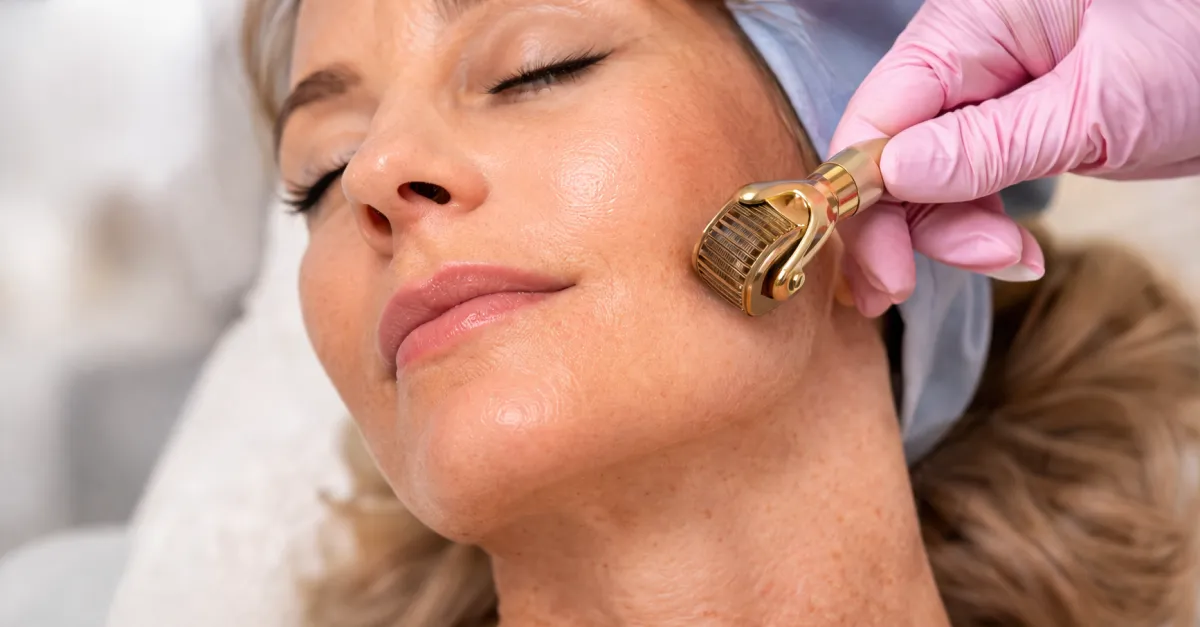
The reason RF microneedling stimulates collagen in the dermis more effectively than surface-only treatments is that the microneedles deliver radiofrequency heat precisely to the depth where collagen is produced, creating a more substantial and organized healing response than topical methods can generate.
For enlarged pores, this treatment is particularly effective. The RF energy tightens the collagen structure around each pore, physically reducing its visible size as the dermis becomes more organized and supportive. For acne scarring, RF microneedling works by remodeling the collagen irregularities that give scars their uneven, pitted appearance. For general roughness and textural unevenness, the progressive collagen build across a treatment series smooths the skin surface measurably.
A three-session series of RF microneedling, spaced four to six weeks apart, typically produces the most comprehensive textural improvement of any non-surgical treatment option. The results develop progressively over the three to six months following the final session as the collagen remodeling completes.
CO2 Laser for Surface Renewal and Deep Collagen
The CO2 laser resurfaces the outer skin layer while delivering thermal energy to the dermis simultaneously, making it one of the most powerful tools available for improving skin texture because it addresses both the surface irregularity and the structural foundation beneath it in a single treatment.
For sun-damaged skin with a rough, uneven surface, enlarged pores, fine lines, and generalised textural irregularity, CO2 laser produces a level of improvement that typically requires multiple sessions of other collagen stimulating treatments to approach. The new skin that emerges after the ten to fourteen day healing period is significantly smoother, more even, and more luminous than the skin that was there before.
CoolPeel, the fractional CO2 approach, produces meaningful resurfacing with a shorter healing time, making it accessible to patients who want the textural benefits of CO2 laser without the full recovery of a traditional resurfacing session. Results are still significant, though somewhat less dramatic than full-field CO2.
Plasma Pen for Precise Surface Texture
While RF microneedling and CO2 laser address texture across broad areas, plasma pen refines delicate surface texture in specific zones where precision matters most, such as crepey eyelid skin, fine lines around the mouth, and shallow surface irregularities that broader treatments cannot target effectively.
The fibroblast activation triggered by the plasma pen produces new collagen specifically at each treatment point, which over several months tightens and smooths the skin in the treated zone in a way that is difficult to replicate with larger-area devices. For patients with specific textural concerns in delicate locations, plasma pen addresses these precisely without disrupting the surrounding skin.
Laser Skin Rejuvenation for Maintenance and Tone
For patients whose primary textural concern is uneven tone, dullness, and early surface irregularity rather than deeper structural changes, laser skin rejuvenation treatments offer a gentler collagen stimulating effect that improves skin quality progressively across a series of sessions with minimal recovery time.
These treatments suit patients in the earlier stages of textural decline who want to maintain skin quality rather than address established damage, and those who have completed a more intensive treatment series and want to sustain the results between annual sessions.
How to Sequence Collagen Treatments for Best Results
The most effective approach to skin texture improvement is to start with the treatment that addresses the most significant structural concern and then maintain the result with a collagen sustaining protocol. For patients with established textural irregularity from scarring, pore enlargement, or sun damage, beginning with a CO2 laser or RF microneedling series produces the largest initial improvement.
Following that foundation with maintenance treatments such as gentle laser rejuvenation or periodic RF toning preserves the structural improvement and continues stimulating collagen at a maintenance level. This prevents the gradual return of textural concerns and keeps the skin in a consistently improved state over the long term.
The sequencing of different treatments also matters in the short term. There are optimal intervals between certain treatment types, and some combinations produce a synergistic collagen response that is stronger than either treatment would achieve alone. A qualified provider can structure a sequence that makes the most of these interactions for a specific patient's skin.
Frequently Asked Questions
How long does it take for collagen treatments to improve skin texture?
The timeline depends on the treatment. CO2 laser produces visible improvement within ten to fourteen days of healing. RF microneedling produces progressive improvement over three to six months following each session. Plasma pen shows results in the treated areas over the same three to six month collagen remodeling period.
Do collagen treatments work for acne scars?
Yes, particularly RF microneedling and CO2 laser, both of which remodel the collagen structure within and around acne scars. Shallow surface scars respond well to resurfacing approaches. Deeper ice pick or boxcar scars require deeper treatments and may need multiple sessions for meaningful improvement.
Can collagen treatments improve skin texture on the body as well as the face?
Yes. RF microneedling with a deep handpiece is effective for body skin texture, particularly on the abdomen, arms, and thighs. Stretch marks, loose skin after weight loss, and general body crepiness all respond to RF microneedling, though results take longer and require more sessions than facial treatments.
Are collagen stimulating treatments safe for all skin types?
RF microneedling is safe for all skin types when performed with appropriate settings. CO2 laser requires more careful assessment for darker skin tones due to the risk of pigmentation changes. Plasma pen requires a pretreatment protocol for Fitzpatrick V and VI. A thorough consultation should always precede any collagen stimulating treatment.
How often do I need collagen treatments to maintain results?
Most collagen remodeling treatments produce results that last one to two years from a completed series. Annual maintenance sessions help sustain the result and prevent the gradual return of textural concerns. Lighter maintenance treatments like laser toning can be done more frequently if desired.
The Bottom Line
Collagen stimulating treatments genuinely improve skin texture by rebuilding the structural foundation that determines how the skin surface looks and feels. The right combination of treatments for a specific patient depends on the type and severity of their textural concerns, their skin type, and their tolerance for downtime.
Bellasee Beauty offers RF microneedling, CO2 laser resurfacing, plasma pen, and laser rejuvenation for skin texture improvement. A consultation with their team is the most effective way to build a treatment plan that addresses your specific textural concerns.
