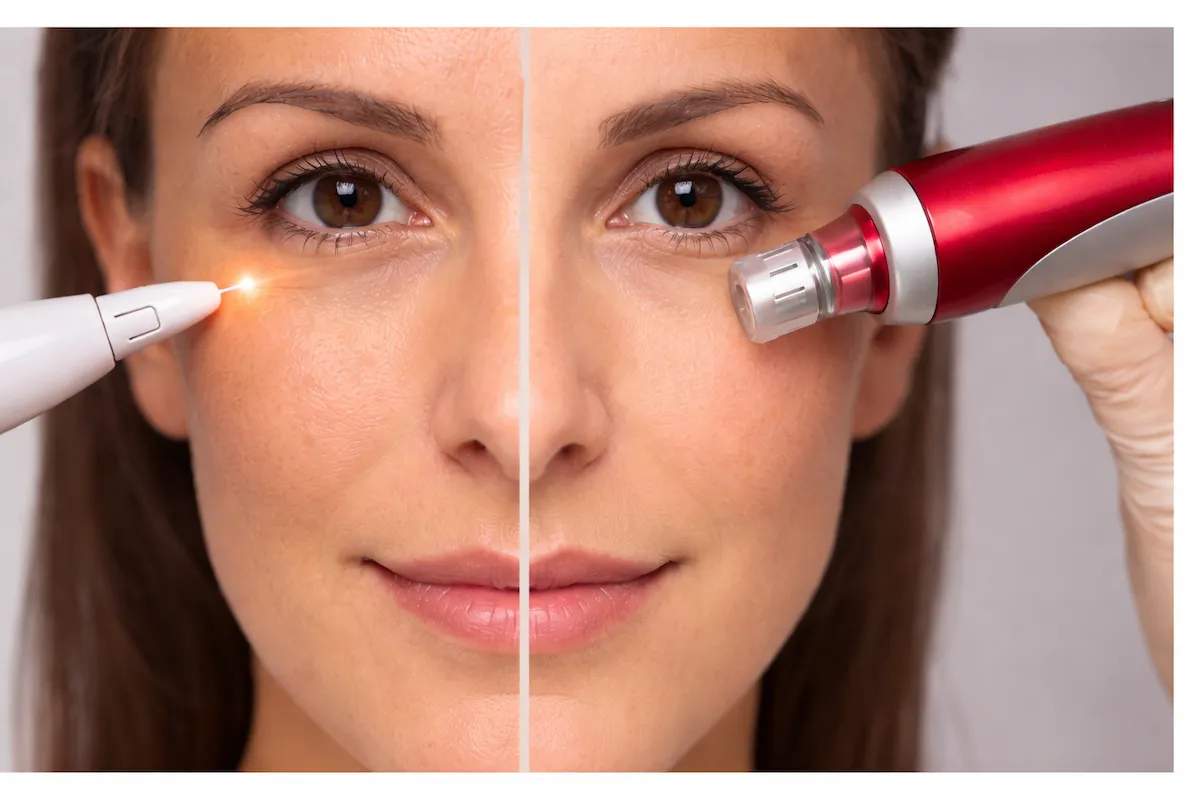
Plasma Pen vs Microneedling: Which Works Better?
Two of the most talked-about skin treatments in aesthetics right now are plasma pen and RF microneedling, and the questions about which one works better come up constantly. Both treat skin aging. Both stimulate collagen. Both are non-surgical. But the way they work, what they are best suited for, and the experience they put the patient through are different in ways that matter significantly when choosing between them.
The comparison is worth making carefully because the answer is not one-size-fits-all. Someone concerned about hooded eyelids and vertical lip lines will get a very different result from each treatment. Someone dealing with textural irregularities across their cheeks or neck will land in the opposite camp. Understanding what each treatment actually does to the skin is the starting point for understanding which one is the right tool for a particular problem.
Quick Answer: Plasma pen works better for delicate, small areas where surgical precision matters, such as eyelids, lip lines, and fine wrinkles on thin skin. RF microneedling works better across larger areas with laxity, acne scarring, uneven texture, or where a deeper collagen remodeling effect is needed throughout the dermis. For many patients, the most complete result comes from using both strategically rather than choosing one over the other.
How Plasma Pen Works
A plasma pen creates microdots on the skin surface using a low-frequency plasma arc that causes an immediate contraction of the tissue at the point of contact. Each tiny dot triggers fibroblast activation beneath the skin, which rebuilds collagen and elastin in the treated area over the following months.
The effect is concentrated and precise. The plasma arc touches the skin at a specific point, creating a controlled micro-injury that the body then heals from with new, tighter tissue. This precision is what makes the plasma pen particularly effective for areas that other devices struggle to address: the thin, crepey skin of the upper eyelids, the fine lines around the mouth, and under-eye laxity.
The trade-off is downtime. The tiny carbon crusts that form at each treatment point take five to ten days to slough off naturally, and there is typically some swelling around the eyes for two to four days following treatment. The result is real, significant tightening that continues to develop for three to six months, but it requires patience during the healing phase.
How RF Microneedling Works
A Virtue RF microneedling treatment like RF microneedling delivers radiofrequency heat deep into the dermis through gold-tipped microneedles at precisely controlled depths, triggering a sustained collagen remodeling response throughout the treated tissue rather than at surface points.
The RF energy heats the collagen fibers within the dermis, causing immediate tightening while also stimulating the production of new collagen and elastin over the following months. Because the energy is delivered below the surface through the needles, the outer layer of skin is largely spared, which is why RF microneedling has such minimal visible downtime: mild redness for 24 to 48 hours rather than visible crusting over ten days.
This treatment covers more ground effectively. A full face, neck, chest, and body areas can all be treated with RF microneedling in a single session, and the results across broad areas of textural irregularity, large pores, acne scarring, and skin laxity are consistently strong.
The Key Differences in What Each Treats Best
Plasma pen is the superior tool for thin, delicate, or small areas where precision targeting matters. The upper eyelid is the clearest example: it is a difficult area to treat with larger devices because of the risk to the eye and the thinness of the tissue. Plasma pen can create a non-surgical blepharoplasty-like effect in this area that RF microneedling and most lasers cannot replicate.
Fine lines around the mouth, vertical lip lines, and crepey neck skin are similarly strong plasma pen targets. The treatment traces the lines and addresses the skin surface directly, contracting the tissue and rebuilding collagen specifically in the treated zones.
RF microneedling, on the other hand, is the better tool for global skin quality improvement. Acne scars, enlarged pores, overall skin laxity, rough texture, and the kind of widespread collagen loss that comes with natural aging respond well to a three-treatment series of RF microneedling. The results are natural, progressive, and cumulative across the full treatment area rather than concentrated at specific points.
Downtime and Skin Type Considerations
Plasma pen requires more downtime than RF microneedling. The healing process after a plasma pen treatment is visible and takes time. For patients who can plan around ten days of visible healing, the results are genuinely impressive and often transformative in the treated areas. For those who cannot manage that window, RF microneedling produces less visible downtime with strong results across a broader area.
Skin type matters significantly for plasma pen. The treatment is best suited to lighter Fitzpatrick skin tones (types I through IV) and requires a pretreatment protocol for darker skin to manage the risk of post-inflammatory hyperpigmentation. RF microneedling is safe across all skin types when performed with appropriate settings, which makes it a more universally applicable option.
Budget and treatment frequency also factor in. Plasma pen typically achieves significant results in one or two sessions, while RF microneedling produces its best results through a series of three sessions. Depending on the concern being addressed, the total investment for each approach varies, and a consultation will clarify which protocol makes financial sense for the specific goal.
When to Use Both Together
For patients with multiple concerns that fall into both categories, combining plasma pen and RF microneedling produces a more comprehensive result than either alone. A common approach is to perform RF microneedling across the full face for overall skin quality and laxity, then address the upper eyelids and lip lines specifically with the plasma pen. The two treatments can be staggered or, in some cases, performed on the same visit for areas that do not overlap.
This combination thinking reflects how experienced practitioners approach anti-aging treatment: not as a choice between one tool or another, but as a question of which tool is best suited to each specific area and concern on a given patient's face.
Frequently Asked Questions
Which is more painful, plasma pen or microneedling?
Both are performed with topical numbing, making them tolerable for most patients. Plasma pen can feel warm or slightly zingy in sensitive areas like the eyelids. RF microneedling is described by most patients as mild pressure and warmth. Neither is typically described as significantly painful.
Can plasma pen and RF microneedling be done at the same appointment?
In some cases yes, depending on the areas being treated. A provider can perform RF microneedling across the full face and then address specific small areas with the plasma pen in the same session. This requires planning and clear communication about the treatment map before the appointment begins.
How long do results last from each treatment?
Plasma pen results typically last one to three years depending on aging and sun exposure. RF microneedling results from a three-session series last one to two years, with annual maintenance sessions helping to sustain the collagen response over time.
Which treatment is better for acne scars?
RF microneedling is the more established and effective treatment for acne scarring because it remodels the dermal tissue directly beneath the scar through precise needle depth and RF energy. Plasma pen can address shallow surface irregularities from scarring but does not reach the dermal layer as effectively.
Does skin tone affect which treatment I can have?
Yes, particularly for plasma pen, which carries a higher risk of hyperpigmentation in darker skin tones without proper pretreatment protocols. RF microneedling is safe across all skin types when performed correctly. Both treatments should involve a thorough consultation and skin assessment before proceeding.
The Bottom Line
Plasma pen and RF microneedling are both effective treatments, but they work differently and excel in different situations. Choosing between them depends on what you are treating, where it is on your face or body, your skin type, and the downtime you can manage.
At Bellasee Beauty, both treatments are available and can be recommended or combined based on your specific goals. A consultation is the most useful next step for understanding which approach makes the most sense for your skin.
